873 products
873 products
Sold Out
Quick view


Sold Out
Quick view


Sold Out
Quick view


Sold Out
Quick view


Sold Out
Quick view


Sold Out
Quick view


Sold Out
Quick view


Sold Out
Quick view


Sold Out
Quick view


Sold Out
Quick view


Sold Out
Quick view


From Mine to Artist to You
The Story Behind Authentic Native American Jewelry
Authentic Native American jewelry begins long before the finished piece reaches the gallery. It starts with natural stone, sterling silver, an artist’s vision, and the traditional skills used to bring each design to life. Lantern Dancer Gallery has celebrated Native-made jewelry and Southwestern artistry since 1990.

Natural turquoise before it becomes jewelry |
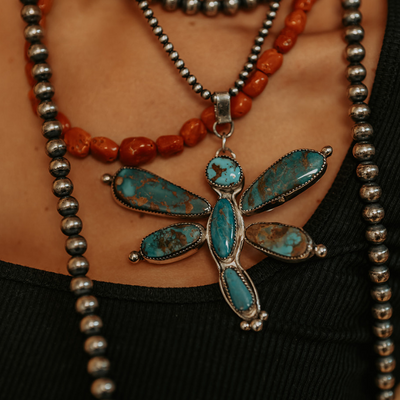
The Stone Before It Was Jewelry, It Was TurquoiseAuthentic turquoise jewelry begins with the stone itself. Collectors look beyond color to appreciate the turquoise mine, natural matrix, rarity, cut, and the way an individual stone works with the artist’s design. Genuine turquoise may contain brown, black, gold, or webbed matrix. These naturally occurring markings are not flaws. They are part of the stone’s identity, giving every turquoise ring, pendant, necklace, and bracelet its own character. The stone is not decoration added at the end. It is often where the entire design begins. Learn more in our guide, How to Tell if Turquoise Is Real . |
|
The Artist Handcrafted by Native American ArtistsAuthentic Native American jewelry is shaped through skill, patience, and generations of artistic knowledge. Silversmiths cut, stamp, hammer, file, solder, polish, and set each component by hand. This process creates the subtle differences that distinguish handmade Native American jewelry from factory-made imitation. Every stamp, stone placement, and silver detail reflects a decision made by the artist. Lantern Dancer Gallery carries traditional cluster work, stamped silver, Navajo pearls, contemporary designs, and jewelry connected to Navajo, Zuni, Hopi, Santo Domingo, and other Southwestern artistic traditions. |

Native American silversmithing at the workbench |

Authentic turquoise collected and styled your way |
The Collector Jewelry Made to Become Part of Your StoryNative American jewelry is meant to be worn. A turquoise ring can become the piece you reach for every morning. A sterling silver cuff can mark a milestone. A strand of handmade Navajo pearls can be layered, restyled, and passed from one generation to the next. Today’s collectors mix vintage and contemporary work, understated silver and bold turquoise, inherited pieces and newly discovered artists. That freedom is one reason authentic Southwestern jewelry remains timeless. One authentic piece can hold more meaning than a drawer filled with imitation. |
A Western Icon
Collected for Generations. Styled for Today.
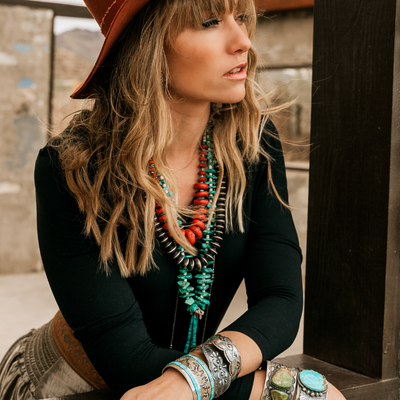
Squash blossom necklaces and handmade silver jewelry have become enduring symbols of Southwestern and Western style. Today, collectors wear these statement pieces with denim, dresses, linen, and modern wardrobe staples.

Native American jewelry has influenced Western style for generations |
Authentic turquoise styled with individuality |
Collector Questions
Native American Jewelry FAQs
What makes Native American jewelry authentic?
Authentic Native American jewelry is created by a Native American artist. Artist identity, craftsmanship, materials, and trusted sourcing all matter when determining authenticity.
How can I tell if turquoise is real?
Natural turquoise often shows individual color variation and matrix formed within the stone. Source, treatment, construction, and seller transparency should also be considered.
What are Navajo pearls?
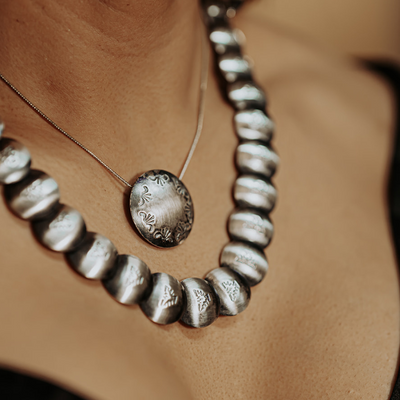
Navajo pearls are sterling silver beads handmade by Navajo artists. Traditional methods may include shaping, soldering, oxidizing, and polishing each bead.
How should I care for turquoise and sterling silver?
Keep turquoise away from household cleaners, perfume, harsh chemicals, and prolonged moisture. Store pieces carefully and use a soft polishing cloth suitable for sterling silver.
Why Authenticity Matters
Real Materials. Real Artists. Real Stories.
Factory-made Southwestern-style jewelry may imitate the appearance, but it cannot reproduce the artist’s hand, cultural connection, or individuality of authentic Native-made work.
Lantern Dancer Gallery has specialized in authentic Native American jewelry since 1990.